
How to Search Floyd County Court Records
Floyd County court records are searched first through Indiana MyCase or the current public MyCase application. The Indiana Judicial Branch Floyd County courts page points users to that same statewide case search. MyCase pulls public data from Odyssey courts, and Floyd Circuit Court, Floyd Superior Court 1, Floyd Superior Court 2, Floyd Superior Court 3, and the abolished Floyd County Court archive all use Odyssey records. Public MyCase is free, but it is not the official court record. The official record remains with the court or the Floyd County Clerk.
Before starting, gather the party name, business name, case number, citation number, attorney name, or a date range. Floyd County case numbers often begin with court identifiers such as 22C01 for Circuit Court, 22D01 for Superior Court 1, 22D02 for Superior Court 2, or 22D03 for Superior Court 3. Search results may include converted older data, so a thin online docket does not always mean the clerk has no file. If a document link is missing, the next channel is the Floyd County Clerk in Room 235, not a third-party database.
- Open MyCase and choose case, party, business, or attorney search.
- Enter one identifier at a time, such as a case number, citation number, last name, or business name.
- Narrow Floyd County results by court, case category, status, and filing-date range when those filters appear.
- Open the result and read the case summary, parties, events, hearings, financials, and public document links.
- Contact the Floyd County Clerk for certified copies, older documents, or records that are public but not linked online.
The Indiana MyCase help page explains that public users see public, non-confidential records, while parties and attorneys may see more after signing in or using an access code. Captcha checks may appear after searches. No search returns more than 1,000 results, so common names need careful narrowing.
Floyd County Court Records Search Fields
The official MyCase search tips describe several search paths. Case-number search is best when a cause number is known. Party search works for people or businesses. Attorney search can use a bar number or name. Court, status, case type, and file-date filters help keep Floyd County court records separate from other Indiana counties.
| Field Label | Type | Required | Notes / Format |
|---|---|---|---|
| Case Number | Text | Yes for case search | Indiana uniform number; hyphens and leading zeroes are not required. |
| Citation Number | Text | Alternative | May need the exact Odyssey citation value. |
| Cross Reference Number | Text | Alternative | May be an older number, agency number, or uniform case number. |
| Last Name | Text | Yes for person search | Use first name, middle name, or date of birth to narrow common names. |
| Business Name | Text | Yes for business search | Use exact business name or a trailing wildcard. |
| Attorney / Bar Number | Text | Alternative | Search by attorney number or by attorney name fields. |
| Court | Dropdown | No | Limit to Floyd Circuit or Floyd Superior courts when available. |
| Case Type / Category | Dropdown | No | Examples include criminal, citation, civil, family, and probate. |
| Status | Dropdown | No | Filter by all, open, or closed. |
| File Date Start / End | Date | No | Use one or both dates to search by filing period. |
MyCase document access guidance is useful when a Floyd County case appears but the document does not. Some case types have public online document access. Others show the docket while the actual paper, scan, or microfilm file must be requested from the clerk.
The MyCase entry point is the public starting screen for Floyd County court records search.
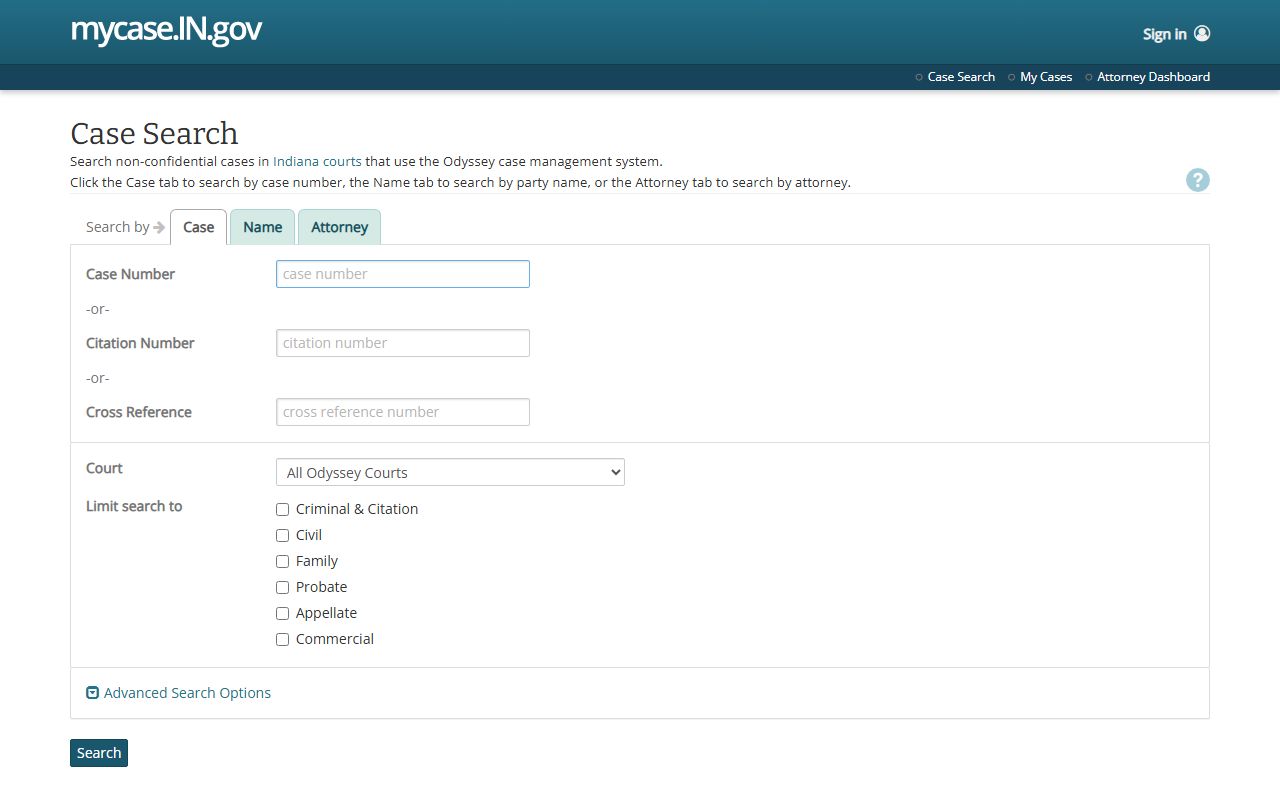
That portal is the broadest public search path before a Floyd County Clerk request is needed.
The current public MyCase application is the live case-search interface used for Floyd County court records.
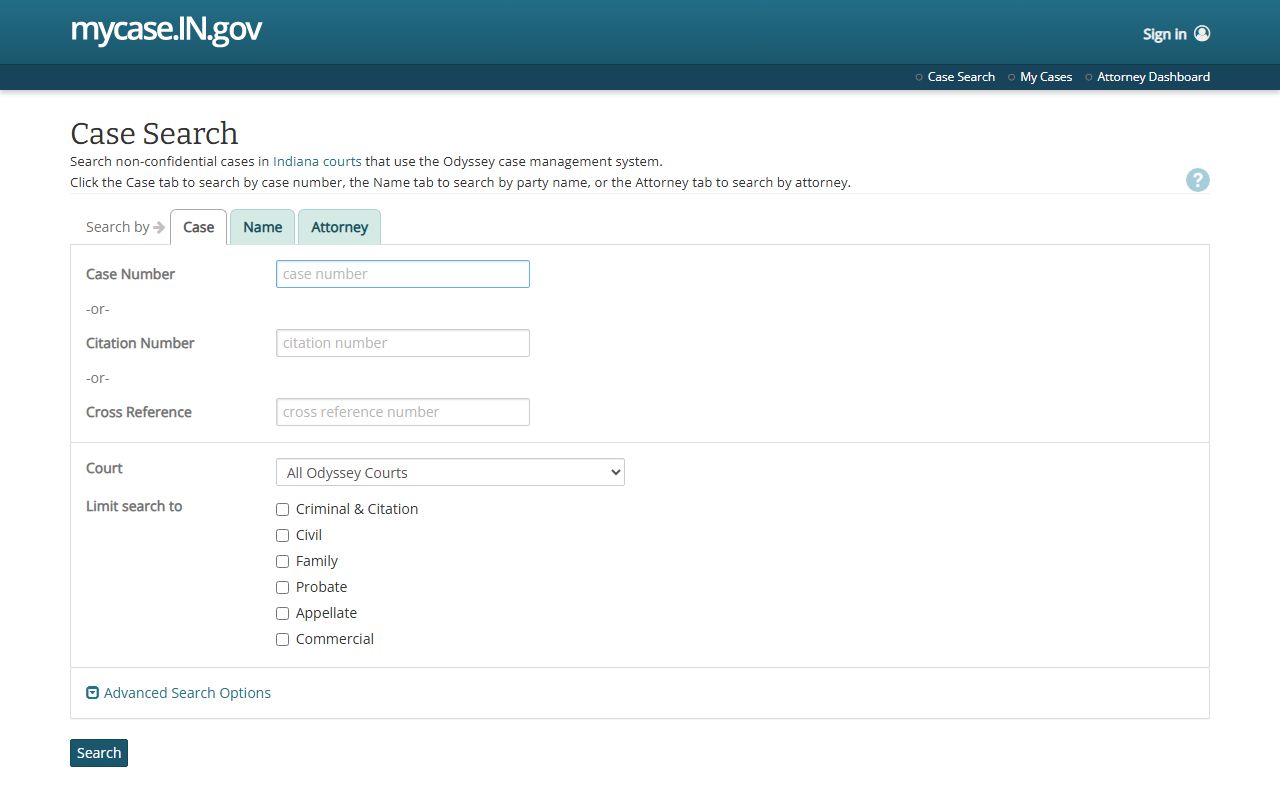
Use the court and case-type filters to keep Floyd County results focused.
Types of Floyd County Court Records
Floyd County court records span several courts and case types. Floyd Circuit Court has original civil and criminal jurisdiction and exclusive local probate, trust, and juvenile jurisdiction. Superior Court 1 handles general jurisdiction work, including felony criminal, civil, divorce, and criminal non-support matters. Superior Court 2 is the practical venue for traffic, small claims, eviction, probation, and alcohol/drug-services matters. Superior Court 3 handles family, civil, criminal, Veterans Court, Commercial Court, and family navigation programs.
Record type affects both search strategy and public access. A civil collection case may show claims, service, orders, and judgment. A criminal case may show charges, pleas, sentencing, fines, bond events, and probation entries. Family and protection-order cases can have public case data but limited document access. Probate records are tied to Circuit Court. Juvenile, adoption, mental-health, sealed, and expunged records have stricter limits.
- Civil records: plenary cases, torts, collections, mortgage foreclosures, small claims, evictions, judgments, and garnishments.
- Criminal records: felony, misdemeanor, criminal non-support, bond, plea, sentence, and case-event records.
- Family records: divorce, paternity, custody, parenting time, support, and protection-order case data when public.
- Probate records: estates, guardianships, trusts, wills filed in estates, inventories, accountings, and orders.
- Traffic records: citations, UTT numbers, offenses, court dates, fines, costs, and deferral or suspension events.
The MyCase help page explains public, party, and attorney access levels for Floyd County court records.
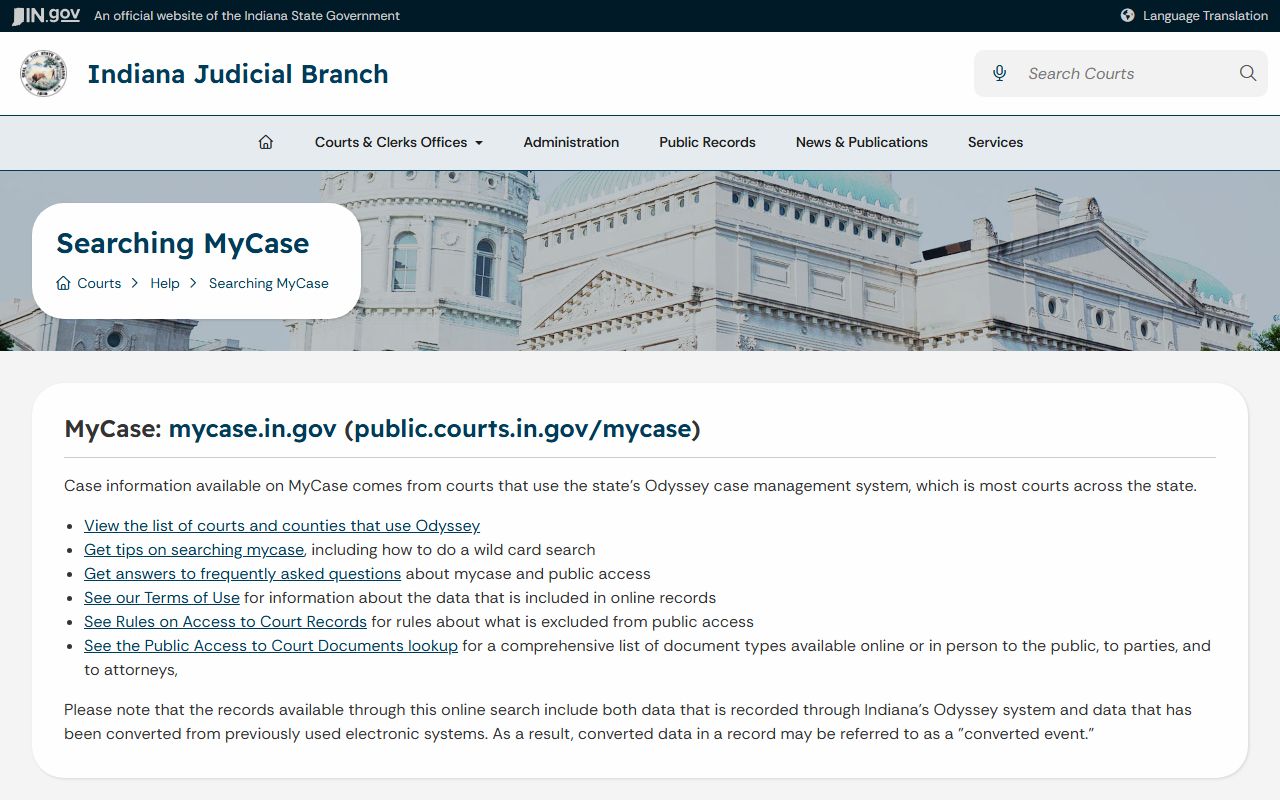
Those access levels matter when a case is visible but a linked document is not.
What Floyd County Court Records Show
A Floyd County court record can show the cause number, court, case type, filing date, status, caption, parties, attorneys, charges or claims, hearings, orders, notices, motions, judgments, sentencing entries, fines, fees, bond, credits, payments, and document links. The chronological case summary, often called the CCS, is the event timeline. It may include converted events from older electronic records, later e-filed documents, hearing settings, service entries, and orders.
| Field | What It Shows |
|---|---|
| Case Number | Indiana cause number with county, court, year or month, case type, and sequence. |
| Court | Floyd Circuit Court or a Floyd Superior Court assignment. |
| Case Type | Category such as civil, family, criminal, citation, probate, adoption, juvenile, or expungement. |
| Parties | Public party names, caption, attorneys, and role labels such as plaintiff, defendant, petitioner, or respondent. |
| Chronological Case Summary | Docket entries, hearings, filings, orders, and converted older events. |
| Documents | Public links when online access is allowed for the case type and user role. |
| Financials | Fines, costs, payments, credits, and balance, subject to clerk confirmation. |
| Disposition | Current or final result, such as judgment, dismissal, conviction, or sentence. |
Financial details in MyCase can lag behind the official clerk balance. The Floyd County Clerk remains the source for certified copies and official payment status. The Floyd County filing-fee page lists copy fees of $1.00 per page and $3.00 per certified document.
The official MyCase search tips show how Floyd County court records can be narrowed by name, number, court, status, and filing date.
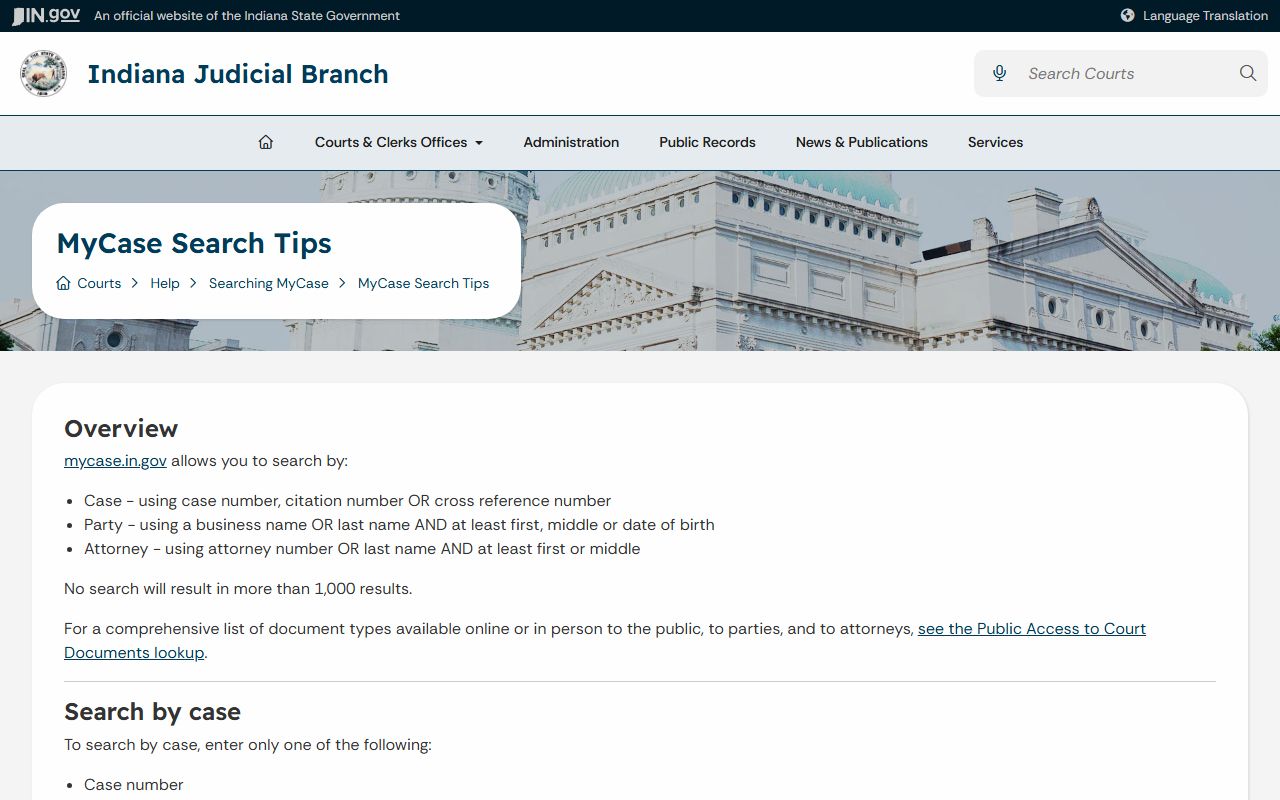
Those filters are the best way to reduce false matches in statewide search results.
Public Access for Floyd County Court Records
Indiana court records are governed first by the Indiana Rules on Access to Court Records. Rule 4 makes court records public unless another law, rule, or court order excludes them. Rule 5 lists records and data that must be excluded or redacted. Administrative Rule 9 controls remote access, bulk court data, and online calendar or docket access. Law-enforcement records tied to Sheriff Steve Bush's office use the Floyd County Sheriff's Department rather than the clerk.
The general Indiana Access to Public Records Act appears in IC 5-14-3, but court-record rules control court files. In practice, that means Floyd County users should search MyCase, then contact the Floyd County Clerk when the public docket exists but the document is not online. The clerk may provide plain or certified copies when the record is public, available, and not sealed. Law-enforcement records, jail records, incident reports, and crash reports use sheriff or police channels, not the court clerk.
Note: Certified Floyd County court records come from the clerk, even when the same case appears in MyCase.
MyCase document access guidance explains why some Floyd County court records show public docket data without online document links.
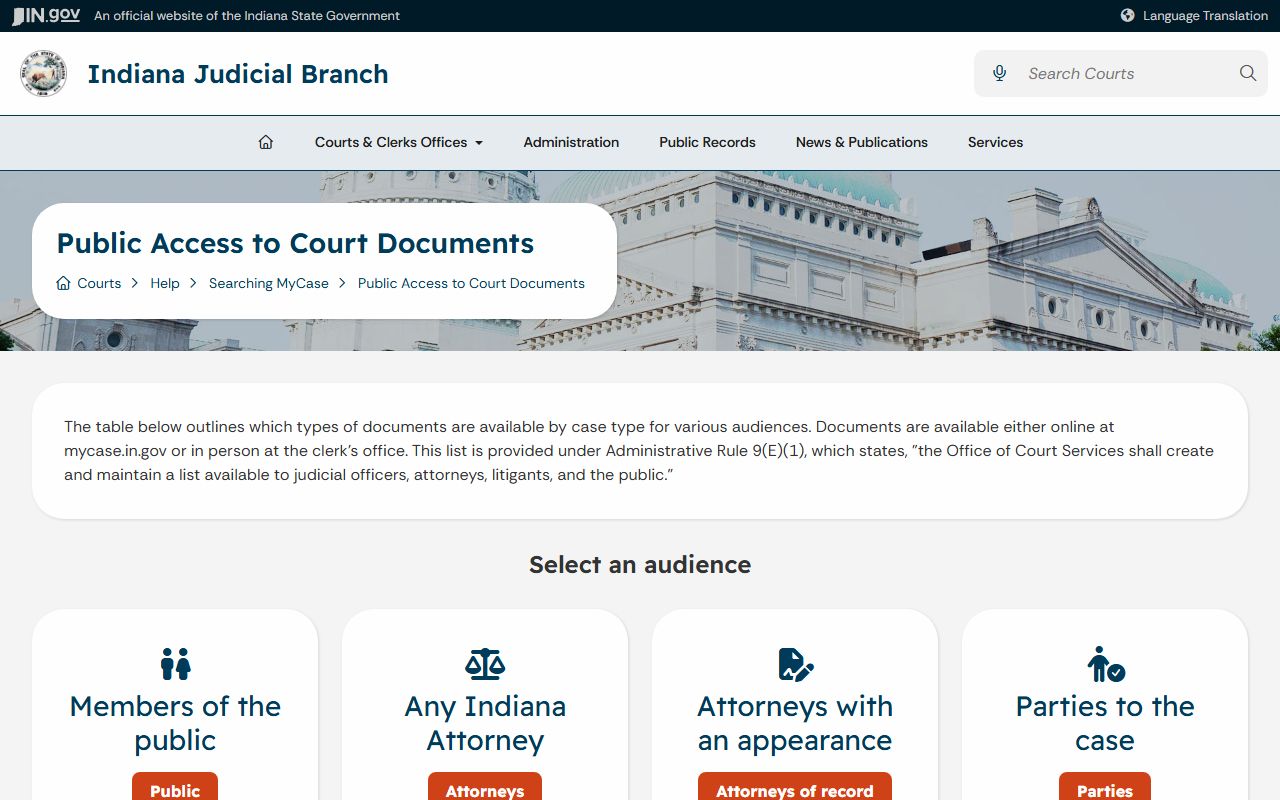
That distinction helps separate an online view from an official clerk copy.
Restricted Floyd County Court Records
Some Floyd County court records are public only in part, and some are not public at all. Juvenile CHINS, termination, delinquency, status, and many juvenile paternity records are confidential or heavily restricted. Adoption records are assigned to Circuit Court and generally are confidential. Mental-health cases under IC 12-26 and mental-health treatment records are excluded from public access under Rule 5. Protected personal identifiers, full Social Security numbers, full account numbers, protected victim or witness addresses, and similar data are redacted.
Sealed and expunged records also require care. Indiana criminal expungement appears in IC 35-38-9. Floyd County local rules assign an expungement petition to the court where the highest-level conviction was entered, with some rules for equal-level convictions in more than one court. The clerk fee schedule lists expungement at $157 under the XP case type. Rule 6 explains how a person may ask a court to exclude an otherwise public record, while Rule 9 covers requests to access excluded court records.
Floyd County Clerk Copy Requests
The Floyd County Clerk is the fallback for court records that are not available through MyCase and for certified copies. Clerk Danita L. Burks serves as the unified clerk for criminal records, civil filings, probate filings, small claims filings, traffic tickets, marriage licenses, protection orders, child support payments, and court-related payments. The Floyd County government clerk page confirms the office location in the New Albany-Floyd County City-County Building. The clerk's records contacts are especially important for scanned, stored, or microfilmed court files.
Floyd County Clerk
311 Hauss Square, Room 235
New Albany, IN 47150
812-948-5411
Monday-Friday 8:00 a.m.-4:00 p.m.; lunch closure 12:00-1:00 p.m.
For mail-copy information, the clerk lists the Records Department at 812-542-3011 and creilly@floydcounty.in.gov. The clerk records page identifies Records Supervisor Kimberly Harrell at 812-941-4578 and kharrell@floydcounty.in.gov for storage and retrieval of court files and documents. Plain copies cost $1.00 per page, and certification costs $3.00 per document. Ask for the case number, party names, case type, and approximate filing year before ordering copies.
The Indiana Access to Court Records rules control which Floyd County court records can be viewed, copied, redacted, or withheld.
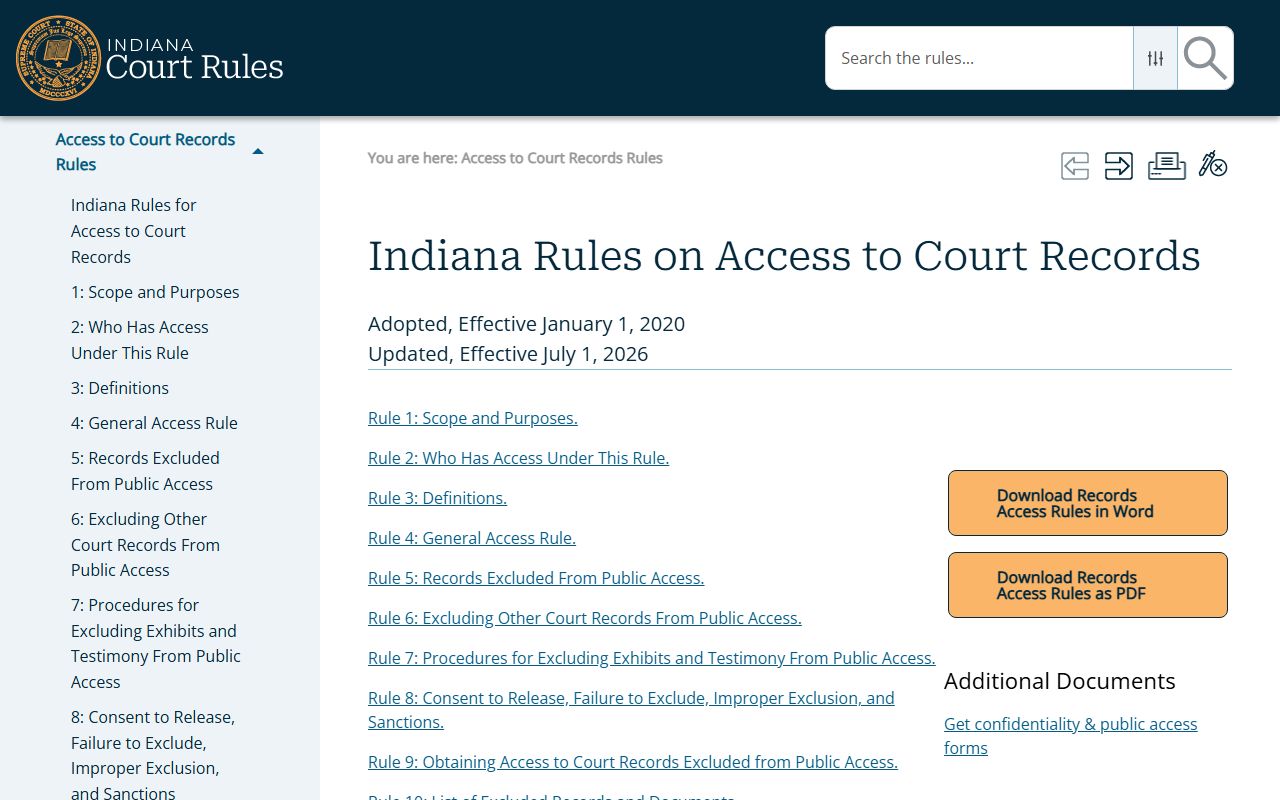
The rules explain why a clerk may release one record, redact another, and deny public access to a third.