
Floyd County Probate Jurisdiction
Floyd Circuit Court has exclusive Floyd County jurisdiction over probate, estate, trust, and juvenile cases. Probate filings go through the Floyd County Clerk, and the court assignment is the Circuit Court. That makes Floyd County different from places where probate work is divided among several county courts. In Floyd County, the local route is direct: file through the Clerk, monitor the public case where available, and request certified letters or orders from the Clerk when a legal copy is needed.
Probate records can include estate opening documents, wills submitted to an estate file, personal representative or administrator filings, inventories, creditor notices, claims, petitions, court orders, guardianship petitions, trust matters, accountings, and closing documents. These records often involve money, real property, family disputes, and protected people, so online access is narrower than a simple name search might suggest. MyCase can show case information, but the Clerk remains the source for official copies and older stored files.
Floyd Circuit Court Probate Jurisdiction
311 Hauss Square, Room 413/417
New Albany, IN 47150
812-948-5455
Monday-Friday, 8:00 a.m.-4:00 p.m.; lunch closure noted from noon-1:00 p.m.
The manifest includes a related Floyd County court services source from the Clerk's small claims and eviction page.
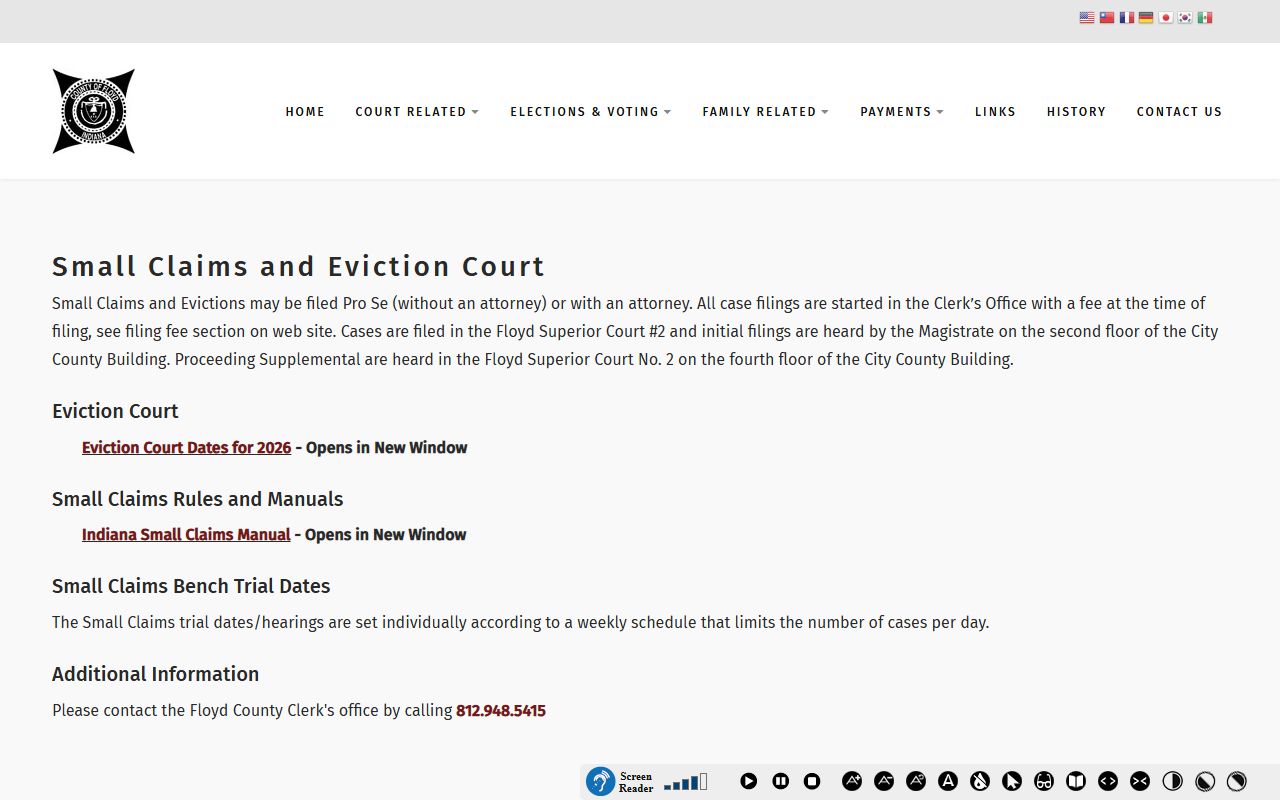
That Clerk source reinforces the same local filing pattern: court cases start with the Clerk before routing to the assigned Floyd court.
Floyd County Probate Terms
Probate terms can be plain once they are tied to the record. A will may name a person to act for the estate. If there is no will, the court may appoint someone under Indiana law. Guardianship records use different terms because the case concerns a protected person, not a decedent's property.
- Testator
- The person who made a will.
- Executor
- The person named in a will to carry out the estate duties.
- Administrator
- A person appointed by the court to manage an estate when no executor is available.
- Intestate
- Dying without a will, which can change who has priority to act or inherit.
- Guardianship
- A court case about authority to care for a minor or adult who needs legal protection.
- Trust matter
- A court filing about trust administration, rights, duties, or disputes.
Search Floyd County Probate Records
Start with Indiana MyCase when the goal is to locate a public probate case number, court, filing date, case status, party name, or docket event. MyCase supports a Probate category, and Floyd users can narrow by court when the search screen permits it. Public document access is limited by case type. The research notes that non-confidential estate orders may be online, but other non-confidential estate documents may require clerk access. Guardianship online document access is more restricted, with many non-confidential records available in person rather than online.
- Search by case number if the Floyd County probate cause number is known.
- If no case number is known, search by party, petitioner, or decedent last name with first or middle name when available.
- Use Floyd Circuit Court as the court filter if MyCase offers that option.
- Select Probate as the case category when the portal allows category filtering.
- Open the result and review the chronological case summary, parties, filing date, status, hearings, and public document links.
- Contact the Clerk when a document is not online, a certified copy is needed, or an older estate file must be retrieved.
| Field Label | Type | Required | Notes |
|---|---|---|---|
| MyCase case number | Text | Optional | Best if known; use the Indiana uniform case number. |
| Party / decedent last name | Text | Usually required for party search | Use wildcard for spelling uncertainty. |
| First / middle | Text | Optional | Narrows broad probate records search results. |
| Court | Dropdown | Optional | Limit to Floyd Circuit Court if possible. |
| Case category | Dropdown | Optional | Select Probate. |
| Status | Dropdown | Optional | Open, closed, or all. |
| File date | Date range | Optional | Useful for an estate opening year. |
Floyd County Probate Fees
The Floyd County Clerk's fee schedule identifies the probate filing fees most likely to matter for estate, trust, and guardianship records. Copy and certification fees are separate. A certified order, letter, or docket document may require both page charges and a certification charge. The same Clerk fee page also lists civil, family, and small claims fees, but the probate-specific items are the key amounts for estate users.
| Probate item | Fee |
|---|---|
| Estates | $177 |
| Guardianship | $177 |
| Trusts | $177 |
| Plain copies | $1 per page |
| Certification | $3 per document |
Ashley Underwood is listed for D01 and D03 civil filings, estates, and guardianship at 812-542-3017 and aunderwood@floydcounty.in.gov. Kimberly Harrell is listed as Records Supervisor for storage and retrieval of court files at 812-941-4578 and kharrell@floydcounty.in.gov. Those two contacts are important when a Floyd County probate record cannot be solved from the MyCase docket alone.
Floyd County Probate Record Contents
Estate files may contain the petition to open the estate, will, order appointing a personal representative, letters, inventory, notices to creditors, claims, sale or transfer requests, accountings, and closing filings. Guardianship files may contain a petition, orders, reports, accountings, and documents about the protected person's needs or property. Trust cases may involve petitions about administration, trustee duties, beneficiary rights, or court instructions.
The public version may not show every item. The Indiana access rules exclude or redact protected personal identifiers and sensitive records. Guardianship files can involve medical, financial, or protected-person information. Juvenile matters are also assigned to Circuit Court, but juvenile records are not the same as probate records and are usually confidential or restricted.
The manifest includes the Floyd County GIS office page as a local government source.
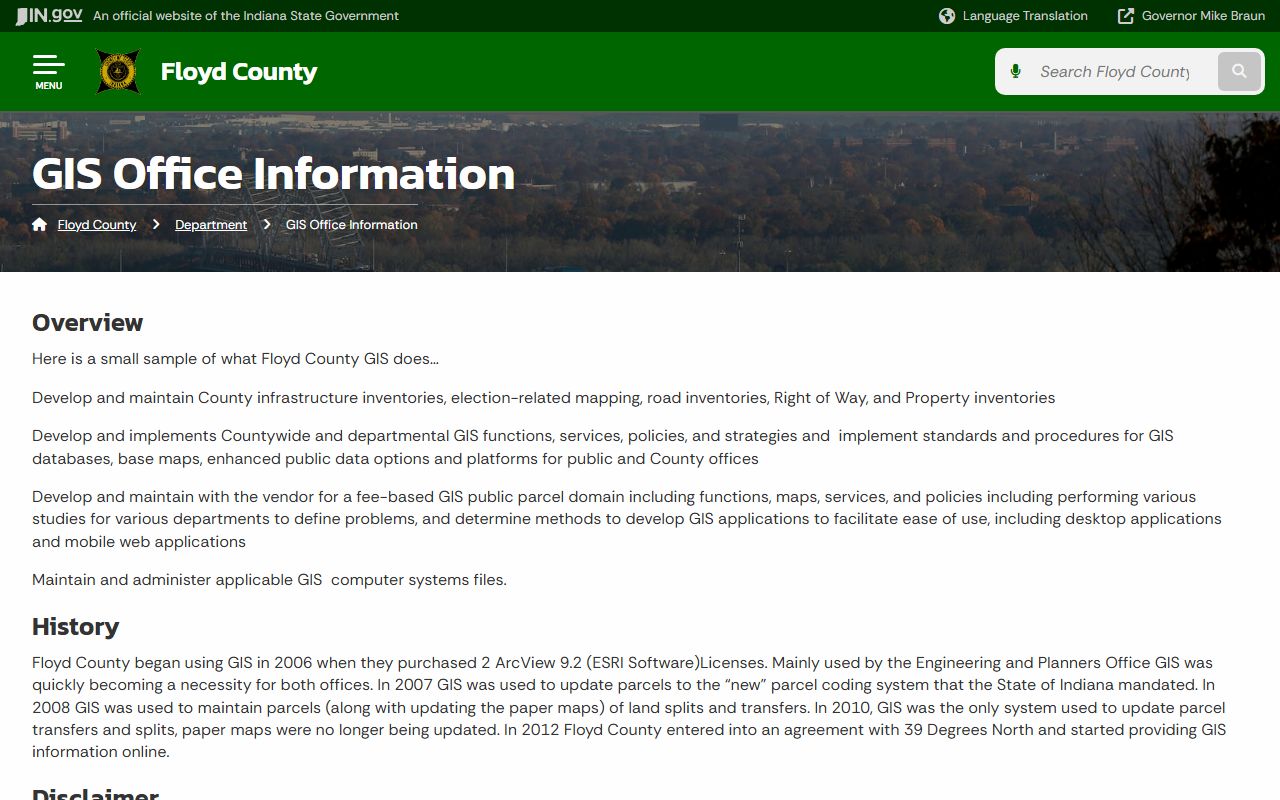
GIS and property records can matter when an estate involves land, but they do not replace the Floyd County probate court file.
Older Floyd County Probate Files
Older Floyd County probate records may not look like a modern MyCase file. The Clerk records page identifies scanned and microfilmed court files and documents, and the research notes that extra retrieval or research charges may apply. A requester may be contacted before those charges are incurred. Converted older events may also appear in MyCase with less detail than a current electronic filing.
For an older estate, gather the decedent name, approximate death year, possible filing year, family names, property clues, and any old cause number before calling the Clerk. The more precise the request, the easier it is for staff to determine whether the record is in MyCase, scanned storage, microfilm, or another retrieval path. Certified copies still come from the Clerk when a legal copy is required for banking, real estate, or agency use.
Older Floyd County estate files can also intersect with land, tax, or family records. A will may identify real property, a deed may refer back to an estate, and a guardianship may explain why a sale or transfer required court approval. Those related records do not replace the probate file, but they can help a requester give the Clerk better search terms. When the file is stored outside current electronic access, the request should be narrow enough for staff to determine whether retrieval is practical and whether research fees may apply.
Note: MyCase is a public search tool, but the official Floyd County probate record is maintained by the court and Clerk.
Restricted Floyd County Probate Records
Indiana court access rules make court records public unless a rule, law, or order excludes them. Probate users still run into limits. Full Social Security numbers, full account numbers, protected addresses, medical details, mental-health records, and similar private data are redacted or excluded. Guardianship records may be more limited than estate records because they often involve a protected person's condition, care, money, or family circumstances.
For estate records, the public may see the case caption, filing date, court, status, docket events, and some orders. For guardianship, the public record may be thinner because health, care, financial, or protected-person details can be limited. For trust matters, the public view depends on the document type and any order restricting access. If a document is not visible online, that does not always mean it is sealed. It may be available only at the Clerk's counter or by a copy request.
Federal court is separate from Floyd County probate. A Floyd estate, trust, or guardianship case belongs in the state trial court system. Federal civil cases use the Southern District of Indiana, and bankruptcy cases use the U.S. Bankruptcy Court for the Southern District of Indiana. Those systems are useful only when the matter is federal or bankruptcy-related, not for ordinary Floyd County estate administration.
The manifest includes the federal courthouse source for the New Albany federal courthouse.
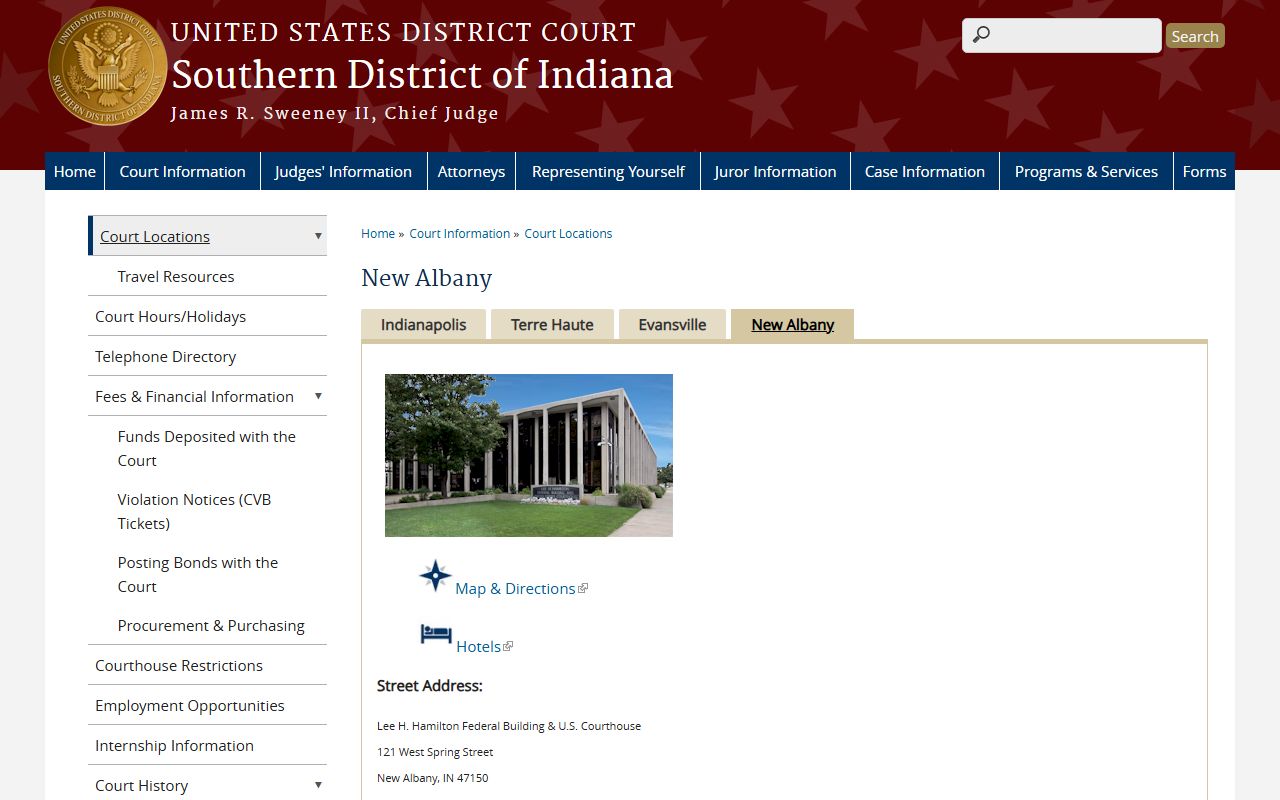
That federal court location is close to the county court area, but it is not the filing office for Floyd County probate records.
The manifest also includes the Bankruptcy Court New Albany division.
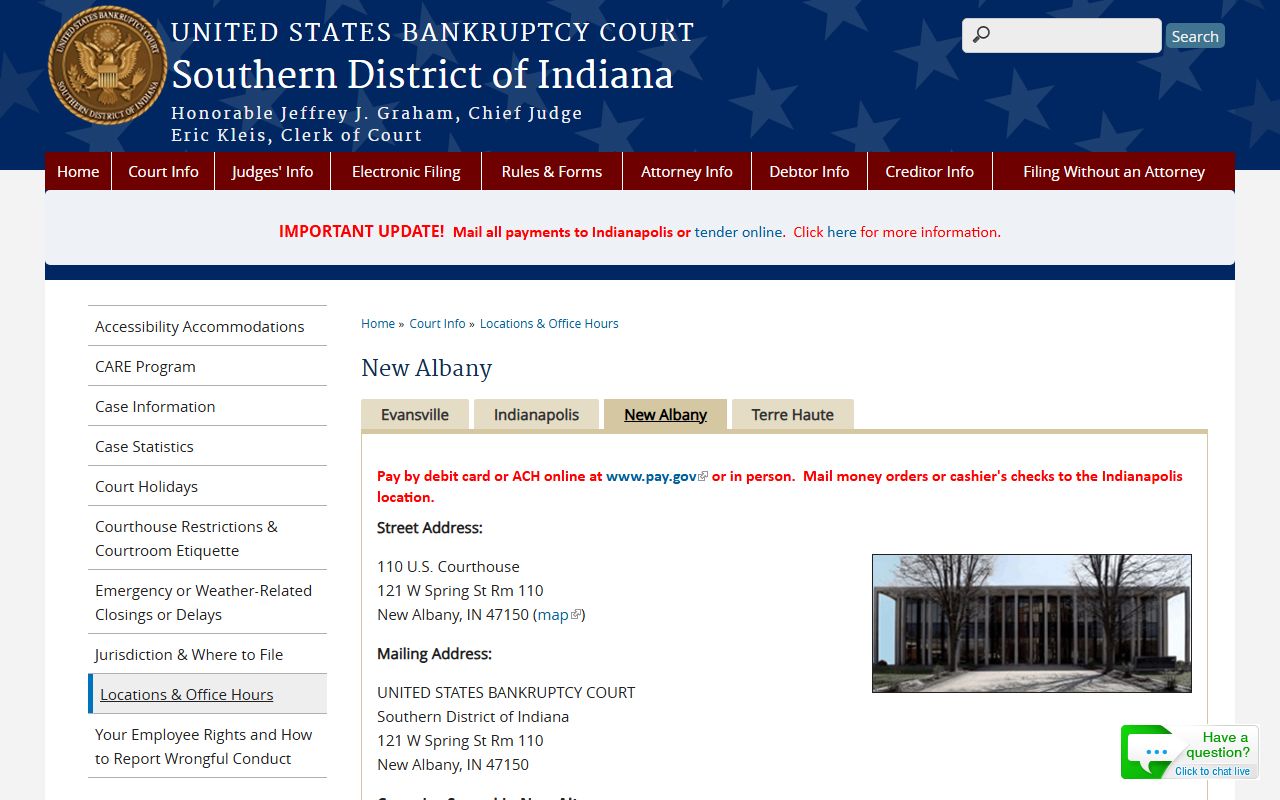
Bankruptcy records may affect estate debts or assets in some cases, but bankruptcy files are searched through the federal bankruptcy court, not the Floyd Circuit Court probate docket.